The Touch Panel industry in China is really heating up right now. If you talk to folks like David Chen, who's a pretty well-known analyst in display tech, they'll tell you how important quality really is. He often mentions that finding the right supplier can seriously make or break your project — it’s kind of a big deal out there. This just shows how competitive the market has become.
When it comes to top custom OEM touch panel suppliers, they’re all about offering options that fit different needs. Take Shenzhen Huaxing Technology, for example — they’re big on innovation and making sure the quality’s spot on. They even offer cool stuff like free-view TFT displays with capacitive touch panels, which really boost the user experience. That kind of attention to detail in manufacturing is so important — but honestly, many suppliers still have a tough time being consistent.
Picking the right partner is crucial in this game. Every supplier has its strengths and weaknesses, right? There’s always room to improve, especially when it comes to quality control and responsiveness. So, doing your homework and choosing based on solid, reliable metrics can really lead to better results. In an industry where every tiny detail counts, making smart, informed decisions is absolutely key.

Understanding OEM Touch Panels: A Comprehensive Overview
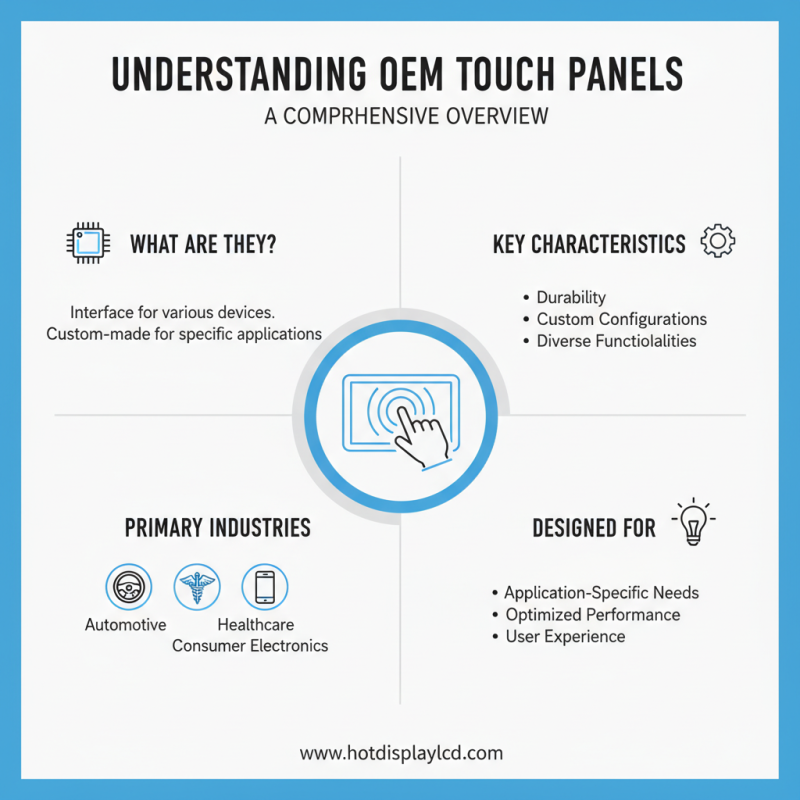
Understanding OEM Touch Panels involves recognizing their significance in modern technology. These panels serve as interfaces for various devices. They come in several configurations and functionalities, catering to industries like automotive, healthcare, and consumer electronics. Each application demands specific features, like durability or sensitivity, shaping how these products are designed.
The manufacturing process for touch panels is complex. It requires precision and quality control to ensure reliability. There are challenges in sourcing materials that meet stringent industry standards. Suppliers often face pressure to innovate while controlling costs. This balance is crucial for success.
Adapting to market changes is another hurdle. The industry evolves quickly, with new technologies frequently emerging. This forces suppliers to rethink their designs and approaches. Continuous improvement is essential. Learning from past mistakes is a part of this journey. OEM touch panels can be a game-changer. Their influence on user experience is profound, impacting how we interact with devices daily.
Key Features of Custom Touch Panels and Their Applications
Custom touch panels have become essential in various industries, fulfilling unique needs for user interaction. These panels can enhance productivity and usability in devices. Key features of custom touch panels include sensitivity, durability, and customization options. Sensitivity is vital as it influences responsiveness in applications. A report from Markets and Markets states that the touch panel market is expected to reach $103.24 billion by 2026, driven by demand in sectors like automotive and retail.
Durability is another critical aspect. Custom touch panels often withstand harsh conditions, making them suitable for industrial environments. For example, an IP67 rating indicates protection against dust and water. Additionally, customization allows manufacturers to tailor designs according to specific product requirements. This flexibility is crucial for applications in medical devices, where sanitation and usability are critical. However, not all suppliers can guarantee the same quality.
It's essential to consider the manufacturing processes behind these panels. Inconsistent quality control can lead to failures, diminishing a product's longevity. A survey indicated that 30% of companies experienced touch panel malfunctions, pointing to issues in supplier reliability. Buyers must be cautious when selecting suppliers, ensuring they adhere to industry standards for quality and performance. This attention to detail impacts user experience directly.
Top Suppliers of Custom OEM Touch Panels in China
When exploring the landscape of custom OEM touch panel suppliers in China, several factors should be considered. Opting for a supplier involves more than just price. Quality assurance is vital. Reliable suppliers often have stringent testing methods. For example, Durability tests can reveal a panel's resilience, which is crucial for many applications.
Beyond quality, understanding a supplier's production capacity is important. Some may promise quick turnaround times but might struggle with large orders. Communication is key. Finding a supplier that responds promptly to inquiries can save you time and money. Their willingness to provide detailed specifications and samples also reflects their commitment to customer service.
However, not every supplier meets these standards. Some may lack transparency about their manufacturing processes. This situation can lead to inconsistencies in product quality. Researching supplier reviews and case studies can illuminate these issues. Not every interaction will be perfect. Learning from challenges faced during partnerships is essential for growth and improvement in future sourcing decisions.
Factors to Consider When Choosing a Touch Panel Supplier
Choosing the right touch panel supplier is crucial for any project. Assessing experience and expertise is key. Look for suppliers with a track record in designing and manufacturing
Panel Touch
solutions. Their portfolio should reflect diverse applications, indicating versatility and depth of knowledge.
Quality assurance is another critical factor. Reliable suppliers implement stringent quality control measures. Request detailed information about their production processes and testing protocols. This can reveal their commitment to quality and durability.
Tips for evaluating suppliers:
- Request samples to inspect the touch panel. This gives insight into tactile feedback and responsiveness.
- Consider the supplier's communication style. Clear and prompt responses often indicate professionalism.
- Ask for client testimonials. Real-world experiences from other customers can provide transparency.
Reflect on these aspects as they can save you from future complications. A trusted panel touch supplier helps ensure project success.
Evaluating Quality Standards and Certifications for Touch Panels
When selecting a custom OEM touch panel supplier in China, understanding quality standards is crucial. Touch Panel Lcd products should meet international standards like ISO 9001. This certification ensures consistent quality management processes. Suppliers should provide evidence of their quality control measures. Look for partners who have undergone third-party audits. Such transparency builds trust.
Consider other certifications like CE and RoHS. These indicate compliance with safety and environmental regulations. A supplier’s ability to meet these standards reflects their commitment to quality. Effective communication around these certifications is essential. It can sometimes be challenging to track down detailed documentation. Take the time to verify all claims made by suppliers.
Tips: Always ask for samples before making a large commitment. Evaluate how well the touch panels perform in real-world conditions. Also, consider a supplier's track record and customer feedback. Not all suppliers maintain consistent quality. A thorough review process will help mitigate risks.
Trends in Touch Panel Technology and Market Demand
The touch panel technology market is rapidly evolving. Demand for innovative interfaces is rising. As consumers become more tech-savvy, their expectations grow. This creates pressure on suppliers to deliver high-quality products. Manufacturers must stay ahead of trends to remain competitive.
One noticeable trend is the shift towards multi-touch capabilities. This allows users to interact with devices more intuitively. Increased resolution and responsiveness are also critical factors. However, some manufacturers struggle to keep up. R&D investment is essential for overcoming these challenges. Another area of growth involves integrating touch panels with IoT devices. This integration leads to smarter home and workplace solutions.
Yet, not all advancements come without pitfalls. Production costs can skyrocket with new technology. This can limit accessibility for smaller businesses. Sustainability is another concern. Manufacturers must consider eco-friendly materials and practices. The balance between innovation and responsible production is delicate. Addressing these issues requires constant reflection and adaptation.
How to Establish a Successful Partnership with Chinese Suppliers
Establishing a successful partnership with suppliers in China requires careful attention to communication and expectations. Recent studies show that 70% of international companies cite poor communication as a key challenge. Clear and consistent dialogue is crucial. Use specific terms for Tft Touch panels to avoid misunderstandings. This approach ensures both parties are aligned on product specifications and delivery timelines.
It's important to understand cultural differences. Relationships matter in Chinese business culture. Take the time to build rapport with your supplier. Engaging in informal conversations can foster trust. A report by the China Council for the Promotion of International Trade indicates that 85% of successful partnerships prioritize relationship-building.
Flexibility is equally crucial. Plans may shift, and suppliers can face unexpected challenges. Be prepared to adapt while maintaining a focus on quality standards. Research shows that companies with flexible yet clear agreements receive better service. Ensure that your expectations are communicated upfront, but remain open to negotiation for the best results.
Exploring the Features and Benefits of the 8.0 Inch Capacitive Touch Panel with GT911 Controller for Enhanced User Interaction
The 8.0 Inch Capacitive Touch Panel with GT911 Controller is a remarkable addition to the realm of user interfaces, particularly for applications requiring intuitive interaction. A standout feature of this touch panel, the CTP080A16 model, is its 5-point touch capability, which significantly enhances user engagement. This allows multiple fingers to interact with the screen simultaneously, making it perfect for gaming, drawing, and various collaborative tasks where responsiveness and precision are crucial.
Designed with user experience in mind, the dimensions of 190.7 x 128.8 x 2.0 mm incorporate a generous window size of 172.824 x 108.24 mm, maximizing the interactive area while maintaining a sleek profile. The lightweight and durable design is achieved through the G+G manufacturing process, coupled with a surface hardness rating of 6H, ensuring that users can interact freely without worrying about scratches or damage. Furthermore, the panel boasts an impressive light transmittance of ≥85%, providing vibrant visuals that enhance the overall aesthetic and functionality of the device it integrates with.
With advanced connectivity through its I2C interface and a user-friendly 6-pin FPC connector, installing the CTP080A16 into various devices is seamless. This combination of features not only promotes a high-performance touchscreen experience but also reflects a commitment to quality and reliability essential for today's technologically advanced applications. The integration of such cutting-edge touch technology is essential for businesses looking to elevate their interactive offerings and enhance consumer satisfaction.
FAQS
: Look at quality assurance, production capacity, and communication. Don't just focus on price.
Check if suppliers have ISO 9001 certification and evidence of quality control.
Good communication can save you time and money. Quick responses indicate reliable service.
Be cautious. Research reviews and case studies to avoid inconsistencies in quality.
Request documentation and independently verify their claims. This builds trust.
Yes, always ask for samples. Evaluating performance in real conditions is crucial.
Absolutely. A track record of quality helps mitigate risks in sourcing.
Not every interaction will be smooth. Learning from challenges is key to improvement.
Ensure they can handle the volume. Some may promise quick turnarounds but struggle.
They provide unbiased evidence of a supplier's commitment to quality standards.
Conclusion
This article provides a comprehensive overview of OEM Touch Panels, highlighting their key features and various applications across industries. It discusses the importance of selecting reliable suppliers, particularly from China, where many of the top custom touch panel manufacturers are located.
Factors such as quality standards, certifications, and the latest trends in touch panel technology are important considerations for businesses looking to source these components. The article also emphasizes the significance of establishing successful partnerships with suppliers to ensure quality and reliability in touch panel procurement, ultimately aiding in the development of effective and innovative solutions for end-users.